Designing a trusted digital health experience
Company
J&J
Role
Sr. Product Designer
Duration
18 months

Overview
Heartline was a digital health study created by Johnson & Johnson and Apple to help people better understand their heart health through iPhone and Apple Watch.
As part of the product design team, I designed experiences that made clinical research feel simple, trustworthy, and accessible.
Challenge
Clinical research has traditionally been difficult for most people to access.
Heartline set out to make participating in a long-term heart health study feel approachable for adults aged 65+, using only an iPhone and Apple Watch. The challenge was to simplify complex medical information, build trust around personal health data, and create an experience that people felt confident returning to over time.

My Role
I collaborated with product managers, researchers, clinicians, engineers, and Apple's ResearchKit team to design participant experiences across the Heartline app.
My work focused on translating complex healthcare journeys into intuitive interfaces, creating scalable UI patterns, and building a design system that balanced usability, accessibility, and clinical requirements.
Understanding the Journey
Before designing the product, we worked closely with researchers and clinicians to understand how people experienced the study.
Instead of starting with screens, we mapped the participant journey to identify where people needed clarity, reassurance, and confidence. Those insights shaped the experience from onboarding through long-term participation.

Designing for Trust
Healthcare starts with trust. Every interaction was designed to help participants understand why their data was being collected, how it would be used, and what would happen next. Rather than presenting everything at once, we introduced information progressively, breaking complex clinical content into smaller, easier-to-understand steps that made the experience feel clear, reassuring, and approachable.

A More Human Visual Language
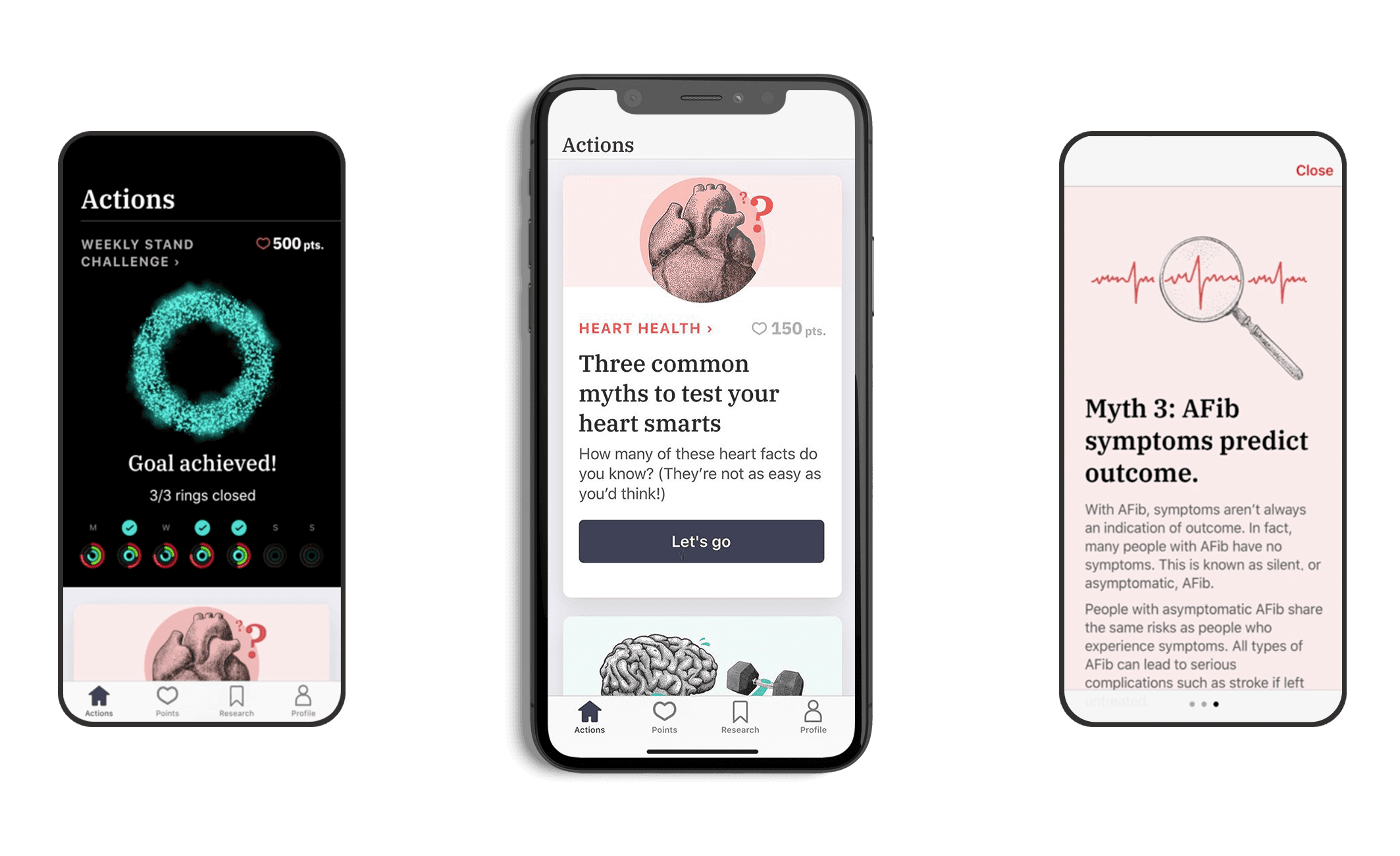
Instead of presenting everything at once, we introduced information gradually. Breaking complex clinical content into smaller steps made the experience feel easier to understand and less intimidating.
Designing for Long-Term Engagement
Joining the study was only the beginning. The experience combined education, timely reminders, and meaningful progress updates to help participants build confidence, stay engaged, and keep contributing throughout the study.

Outcome
The outcome was a healthcare experience that made clinical research feel more human. By making complex information easier to understand and participation easier to navigate, the product helped thousands of people confidently contribute to one of the largest digital heart health studies.

Results
Heartline helped make digital clinical research more accessible while supporting one of the largest app-based cardiovascular studies.
34K+ participants enrolled.
93% of participants remained engaged after 1 year.
86% remained active after 2 years.
82% completed annual assessments after 1 year, with 76% still completing them after 2 years.


Designing a trusted digital health experience
Company
J&J
Role
Sr. Product Designer
Duration
18 months
Overview
Heartline was a digital health study created by Johnson & Johnson and Apple to help people better understand their heart health through iPhone and Apple Watch.
As part of the product design team, I designed experiences that made clinical research feel simple, trustworthy, and accessible.
Challenge
Clinical research has traditionally been difficult for most people to access.
Heartline set out to make participating in a long-term heart health study feel approachable for adults aged 65+, using only an iPhone and Apple Watch. The challenge was to simplify complex medical information, build trust around personal health data, and create an experience that people felt confident returning to over time.
My Role
I collaborated with product managers, researchers, clinicians, engineers, and Apple's ResearchKit team to design participant experiences across the Heartline app.
My work focused on translating complex healthcare journeys into intuitive interfaces, creating scalable UI patterns, and building a design system that balanced usability, accessibility, and clinical requirements.
Understanding the Journey
Before designing the product, we worked closely with researchers and clinicians to understand how people experienced the study.
Instead of starting with screens, we mapped the participant journey to identify where people needed clarity, reassurance, and confidence. Those insights shaped the experience from onboarding through long-term participation.
Designing for Trust
Healthcare starts with trust. Every interaction was designed to help participants understand why their data was being collected, how it would be used, and what would happen next. Rather than presenting everything at once, we introduced information progressively, breaking complex clinical content into smaller, easier-to-understand steps that made the experience feel clear, reassuring, and approachable.
A More Human Visual Language
Instead of presenting everything at once, we introduced information gradually. Breaking complex clinical content into smaller steps made the experience feel easier to understand and less intimidating.
Designing for Long-Term Engagement
Joining the study was only the beginning. The experience combined education, timely reminders, and meaningful progress updates to help participants build confidence, stay engaged, and keep contributing throughout the study.
Outcome
The outcome was a healthcare experience that made clinical research feel more human. By making complex information easier to understand and participation easier to navigate, the product helped thousands of people confidently contribute to one of the largest digital heart health studies.
Results
Heartline helped make digital clinical research more accessible while supporting one of the largest app-based cardiovascular studies.
34K+ participants enrolled.
93% of participants remained engaged after 1 year.
86% remained active after 2 years.
82% completed annual assessments after 1 year, with 76% still completing them after 2 years.